What is Liquidity Management? Tasks, Instruments & Tools 2026
Cash management determines whether your company remains capable of acting at all times, regardless of how profitable it is on paper. In this article, you will learn exactly what cash management is, which tasks and instruments it involves, and how to implement it step by step. You will see how to get started with Excel, when it pays to switch to software, and how to secure your liquidity even in times of crisis. This turns a mandatory task into a real competitive advantage.

Key takeaways
- Cash management is the ongoing planning, monitoring, and control of all cash flows to ensure your company remains solvent at all times while avoiding idle capital.
- The four core tasks are planning, monitoring, controlling, and analyzing. Together, they form a continuous cycle, not a one-time process.
- Lack of liquidity control is one of the most common causes of insolvency: in 2025, there were 23,900 corporate insolvencies in Germany, an increase of 8.3% compared to the previous year (Creditreform, 2025).
- Excel is a good starting point, but it quickly reaches its limits regarding real-time data and scenario planning. Specialized software automates the data foundation and forecasting.
- Good cash management is not just a crisis tool; it is the foundation for investment power, negotiating strength, and predictable growth.
What is cash management?
Cash management refers to the ongoing planning, monitoring, and control of all a company's cash inflows and outflows. The goal: to remain solvent at all times without unnecessarily tying up capital in your account. It thus combines two requirements that seem contradictory at first glance: security and profitability.
According to the Gabler Wirtschaftslexikon, liquidity itself refers to a company's ability to meet its due payment obligations in full at any time.
In short: cash management ensures that there is always enough money to pay invoices, wages, and loans on time. It makes future cash flows visible before they occur, creating room for maneuver. Those who actively manage their liquidity do not just react to bottlenecks—they prevent them.
It is important to distinguish this from profit. A company can be profitable on paper and still run into payment difficulties if customers pay late or large outflows coincide. This temporal perspective is exactly what cash management provides.
We show you how to calculate your liquidity step by step in our article Calculating Liquidity.
What are the tasks of cash management?
Cash management comprises four tasks that work together as a continuous cycle: planning, monitoring, controlling, and analyzing. None of these tasks works in isolation. Only by working together do they create a reliable picture of future solvency.
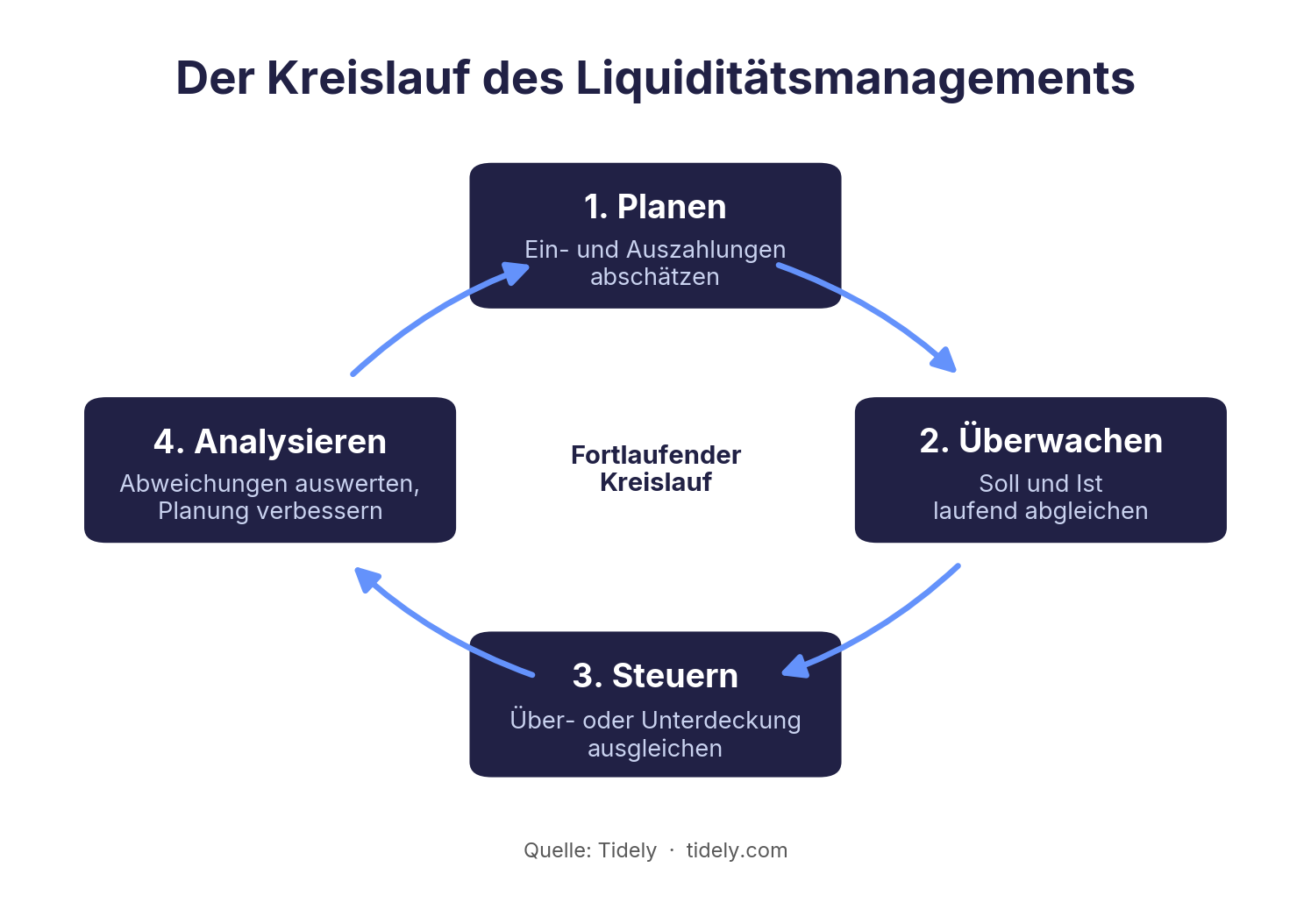
- Planning means realistically estimating future cash inflows and outflows.
You record all expected cash flows, from customer invoices to wages, rent, taxes, and loan repayments. The more accurate the planning, the sooner you will identify potential bottlenecks. Structured liquidity planning is the foundation for all further steps.
- Monitoring means continuously comparing actual account movements with the plan.
A plan is only as good as its comparison with reality. Regularly comparing budget vs. actuals allows you to identify deviations early enough to take corrective action.
- Controlling includes all measures taken to compensate for surpluses or deficits.
If a deficit is looming, you can negotiate payment terms, postpone expenses, or activate a credit line. In the case of a surplus, the question is how to use the excess funds effectively. This active liquidity control is the core of operational cash management.
- Analyzing closes the loop by evaluating deviations and feeding them back into the next planning cycle.
Why did a deviation occur? This evaluation improves the quality of future planning and makes your forecasts more accurate over time.
Welche Instrumente gibt es im Liquiditätsmanagement?
Kurz gesagt: Zu den zentralen Instrumenten zählen die Liquiditätsplanung, Liquiditätskennzahlen wie die Liquiditätsgrade, eine Liquiditätsreserve als Puffer, kurzfristige Finanzierungsinstrumente wie Kontokorrentkredit oder Factoring sowie Szenario-Analysen. Sie greifen ineinander und decken unterschiedliche Zeithorizonte ab.
Welche Kombination passt, hängt von Größe, Branche und Planungshorizont Deines Unternehmens ab.
Die Liquiditätsgrade zeigen, welcher Anteil kurzfristiger Verbindlichkeiten durch liquide Mittel gedeckt ist. Wie Du sie berechnest und welche Richtwerte gesund sind, liest Du im Detail unter Liquidität berechnen. Ein oft unterschätztes Instrument ist die Liquiditätsreserve: Sie ist der Puffer, der Dein Unternehmen handlungsfähig hält, wenn eine große Zahlung ausfällt oder sich verzögert.
Wie funktioniert Liquiditätsmanagement mit Excel?
Kurz gesagt: Eine Excel-Liquiditätstabelle bildet Anfangsbestand, Einzahlungen und Auszahlungen pro Periode ab und zeigt den fortlaufenden Saldo. Sie ist flexibel und günstig, muss aber manuell gepflegt werden. Bei vielen Konten, wachsendem Volumen oder mehreren Szenarien wird die Pflege schnell fehleranfällig.
So baust Du eine einfache Tabelle auf:
Starte mit dem aktuellen Kontostand, ergänze pro Periode alle erwarteten Einzahlungen, ziehe die Auszahlungen ab und übernimm den Endsaldo als Anfangsbestand der nächsten Periode.
Eine fertige Struktur inklusive Formeln findest Du in unserer Excel-Vorlage zur Liquiditätsplanung.
Die Grenzen zeigen sich mit dem Wachstum. Daten aus mehreren Bankkonten müssen von Hand zusammengeführt werden, Szenarien lassen sich nur mühsam abbilden, und ein vergessener Zellbezug kann die ganze Planung verzerren.
Rund 72 % der Treasury-Verantwortlichen erstellen ihre Cashflow-Prognosen weiterhin überwiegend manuell (PYMNTS, 2022). Genau hier setzt spezialisierte Software an.
Rechenbeispiel: So macht die Planung Engpässe früh sichtbar
Ein einfaches Beispiel zeigt den Nutzen. Ein Unternehmen startet mit 20.000 € auf dem Konto und plant drei Monate im Voraus. Der Endsaldo jedes Monats ist der Anfangsbestand des nächsten.
Schon im zweiten Monat sinkt der Saldo auf 1.000 € und damit unter den Sicherheitspuffer, obwohl das Unternehmen über alle drei Monate klar im Plus bleibt. Genau diese Vorwarnung ist der Sinn der Planung: Der Engpass wird sichtbar, solange noch Zeit bleibt, ein Zahlungsziel nachzuverhandeln oder eine Ausgabe zu verschieben.
Wie optimierst Du Dein Liquiditätsmanagement mit Software?
Kurz gesagt: Eine Liquiditätsmanagement-Software automatisiert die beiden aufwändigsten Schritte, die Datenbasis und die Prognose. Sie verbindet Bankkonten sowie ERP- und Buchhaltungssysteme automatisch, hält die Planung tagesaktuell und ermöglicht Szenarien auf Knopfdruck. Weniger manuelle Pflege bedeutet aktuellere Zahlen und mehr Zeit für Entscheidungen statt für Datenpflege.
Statt Kontobewegungen und Rechnungsstatus von Hand zu übertragen, synchronisiert die Software Deine Konten und Vorsysteme automatisch. Du erhältst einen Echtzeit-Überblick über Deine Liquidität und triffst Entscheidungen auf aktueller Datenbasis.
Der Markt entwickelt sich schnell in Richtung Automatisierung. Rund 43 % der wachstumsstarken Unternehmen setzen KI-Lösungen ein, um ihre Wachstumsziele zu unterstützen (PYMNTS, 2025). Der Vorteil zeigt sich vor allem bei der Prognosegenauigkeit: Eine rollierende 13-Wochen-Planung erreicht in den ersten vier Wochen über 95 % Treffsicherheit (GTreasury, 2025).
Ein Beispiel für eine solche Lösung ist Tidely. Die Software bietet zahlreiche Integrationen und Anbindungen und verbindet über 5.000 Banken, kategorisiert Zahlungen per KI automatisch und schlägt auf Basis der letzten zwölf Monate Planwerte für die kommenden Monate vor. Szenarien für Best, Base und Worst Case lassen sich mit wenigen Klicks vergleichen.
Welche Anbieter es sonst gibt und wie sie sich unterscheiden, zeigt unser Vergleich der Liquiditätsplanung-Software.
AUS DER PRAXIS
Viele KMU starten mit Excel und wechseln in dem Moment zur Software, in dem ein zweites oder drittes Bankkonto hinzukommt. Ab diesem Punkt kostet die manuelle Konsolidierung mehr Zeit, als die Planung eigentlich wert ist, und die Zahlen sind schon veraltet, sobald sie fertig zusammengeführt sind.
Wie sicherst Du die Liquidität in Krisenzeiten?
Kurz gesagt: In Krisenzeiten entscheidet die Geschwindigkeit. Ein tagesaktueller Liquiditätsplan mit Worst-Case-Szenario zeigt früh, wann ein Engpass droht. So bleibt Zeit für Gegenmaßnahmen wie Zahlungsvereinbarungen, Kostenpriorisierung oder Factoring, statt kurzfristig unter Druck reagieren zu müssen.
Das wirtschaftliche Umfeld bleibt anspruchsvoll. Für 2026 rechnet Allianz Trade mit einem weiteren Anstieg der Unternehmensinsolvenzen um rund 2 % (Allianz Trade, 2025). Umso wichtiger ist ein belastbarer Puffer und ein früher Blick auf drohende Engpässe.
Konkrete Maßnahmen, um einen Engpass gar nicht erst entstehen zu lassen, findest Du im Artikel Liquiditätsengpass vermeiden.
Ein Hebel, um gebundenes Kapital schnell freizusetzen, ist Factoring, also der Verkauf offener Forderungen. Wie das funktioniert, liest Du unter Mit Factoring die Liquidität voll ausschöpfen.
Wie findest Du die Balance zwischen Liquidität und Rentabilität?
Kurz gesagt: Liquidität und Rentabilität stehen in einem Zielkonflikt. Zu viel Liquidität kostet Rendite, weil Kapital ungenutzt bereitliegt, zu wenig gefährdet die Zahlungsfähigkeit. Gutes Liquiditätsmanagement findet den Mittelweg: genug Puffer für Sicherheit, ohne dass große Beträge unverzinst auf dem Konto liegen. Diese Balance ist eine Steuerungsaufgabe, keine feste Zahl.
In der Praxis hilft eine klare Trennung: Ein definierter Teil der liquiden Mittel bleibt als Reserve unangetastet, der Rest steht für Investitionen, Tilgung oder verzinste Anlage zur Verfügung.
Als Orientierung: Die durchschnittliche Eigenkapitalquote im Mittelstand liegt bei 30,7 % (KfW-Mittelstandspanel, 2025), ein solider Kapitalpuffer ist also die Regel, aber keine Selbstverständlichkeit.
Wie hoch die Reserve sein sollte, hängt vor allem von der Schwankung Deiner Zahlungsströme ab. Je unregelmäßiger die Einzahlungen, desto größer der sinnvolle Puffer. Ein großer Hebel für mehr freie Liquidität liegt im gebundenen Kapital selbst: Wie viel davon im laufenden Geschäft steckt und wie Du es senkst, zeigt Dir die Kennzahl Working Capital.
Wie setzt Du überschüssige Liquidität sinnvoll ein?
Kurz gesagt: Freie Liquidität gehört nicht ungenutzt aufs Konto. Erst der Sicherheitspuffer, dann die Rendite: Überschüsse fließen in Wachstum, in die Tilgung teurer Kredite oder in kurzfristige Anlagen, die bei Bedarf schnell verfügbar bleiben.
Entscheidend ist, dass das Geld verfügbar bleibt, wenn Du es brauchst.
Für die meisten KMU steht die Verfügbarkeit vor der maximalen Verzinsung. Eine vorzeitige Tilgung teurer Kontokorrentkredite bringt oft mehr als eine geringe Anlagerendite, weil die vermiedenen Zinsen unmittelbar wirken. Wer eine echte Liquiditätsreserve aufbaut, verschafft sich zusätzlich Verhandlungsstärke gegenüber Banken und Lieferanten.
Liquiditätsmanagement vs. Liquiditätsplanung: Wo liegt der Unterschied?
Kurz gesagt: Liquiditätsplanung ist ein Teil des Liquiditätsmanagements, nicht dasselbe. Die Liquiditätsplanung beantwortet die Frage, wie sich die Zahlungsströme entwickeln. Das Liquiditätsmanagement geht weiter und fragt, wie das Unternehmen dauerhaft zahlungsfähig und handlungsfähig bleibt. Planung ist ein Werkzeug, Management ist der Steuerungskreislauf drumherum.
Wer den Unterschied kennt, wählt die richtigen Werkzeuge. Eine reine Planung reicht, um Transparenz zu schaffen. Für die laufende Steuerung braucht es zusätzlich Überwachung, Szenarien und ein Instrument, das die Zahlen aktuell hält. Wie eine vollständige Planung aufgebaut ist, zeigt der Leitfaden Liquiditätsplanung: Anleitung, Beispiel und Vorlage.
Fazit: So optimierst Du Dein Liquiditätsmanagement
Liquiditätsmanagement ist kein Krisenwerkzeug, sondern die Grundlage für unternehmerische Handlungsfähigkeit. Wer Zahlungsströme früh sichtbar macht, laufend überwacht und aktiv steuert, verhindert Engpässe, bevor sie entstehen, und kann Chancen nutzen, wenn sie sich bieten.
Der Einstieg gelingt mit Excel, für wachsende Strukturen lohnt der Umstieg auf eine Liquiditätsmanagement-Software, die Bankanbindung und Prognose automatisiert. Entscheidend ist am Ende nicht das Werkzeug, sondern die Regelmäßigkeit: Liquiditätsmanagement wirkt, wenn es Routine wird.
Teste Tidely 7 Tage kostenlos ohne Kreditkarte und behalte Deine Liquidität tagesaktuell im Blick.
Häufig gestellte Fragen zum Liquiditätsmanagement
What is cash management?
Liquiditätsmanagement ist die laufende Planung, Überwachung und Steuerung aller Ein- und Auszahlungen eines Unternehmens. Ziel ist, jederzeit zahlungsfähig zu bleiben, ohne unnötig viel Kapital ungenutzt zu binden.
Was sind die Aufgaben im Liquiditätsmanagement?
Die vier Kernaufgaben sind Planen, Überwachen, Steuern und Analysieren. Sie bilden einen fortlaufenden Kreislauf: Zahlungsströme werden geplant, mit der Realität abgeglichen, bei Abweichungen gesteuert und anschließend ausgewertet.
Was sind Liquiditätsmanagement-Tools?
Liquiditätsmanagement-Tools sind Software-Lösungen, die Bankkonten automatisch anbinden, Zahlungen kategorisieren und die Liquiditätsplanung tagesaktuell halten. Sie ersetzen die manuelle Pflege in Excel und ermöglichen Szenarien und Prognosen auf Knopfdruck.
Worin unterscheiden sich Liquiditätsmanagement und Liquiditätsplanung?
Die Liquiditätsplanung bildet künftige Zahlungsströme ab und ist ein Instrument. Das Liquiditätsmanagement ist der übergeordnete Prozess aus Planen, Überwachen, Steuern und Analysieren, in dem die Planung eine von mehreren Aufgaben ist.
Reicht Excel für das Liquiditätsmanagement aus?
Für kleine Unternehmen mit wenigen Konten und einfachen Zahlungsströmen ist Excel ein sinnvoller Start. Mit wachsendem Volumen, mehreren Konten oder mehreren Szenarien wird die manuelle Pflege fehleranfällig, dann lohnt der Umstieg auf spezialisierte Software.
Warum ist Liquiditätsmanagement so wichtig?
Fehlende Liquiditätssteuerung zählt zu den häufigsten Insolvenzgründen. 2025 gab es 23.900 Unternehmensinsolvenzen in Deutschland, ein Plus von 8,3 % gegenüber dem Vorjahr (Creditreform, 2025). Aktives Liquiditätsmanagement erkennt Engpässe früh und schafft Handlungsspielraum.
Sources
- Creditreform: Insolvenzen in Deutschland, Jahr 2025: https://www.creditreform.de/aktuelles-wissen/pressemeldungen-fachbeitraege/news-details/show/insolvenzen-in-deutschland-jahr-2025
- Gabler Wirtschaftslexikon: Stichwort Liquidität, 2024: https://wirtschaftslexikon.gabler.de/definition/liquiditaet-39685
- PYMNTS: 72% of Treasurers Still Do Cash Flow Forecasts Manually, 2022: https://www.pymnts.com/news/b2b-payments/2022/72-percent-treasurers-still-do-cash-flow-forecasts-manually/
- PYMNTS: CFOs and Treasurers Turn to AI to Tame Cash Volatility, 2025: https://www.pymnts.com/working-capital/2025/cfos-and-treasurers-turn-to-ai-to-tame-cash-volatility/
- GTreasury: What is 13-Week Cash Flow Forecasting, 2025: https://www.gtreasury.com/posts/what-is-13-week-cash-flow-forecasting
- Allianz Trade: Insolvenzstudie 2025: https://www.allianz-trade.de/presse/pressemitteilungen/allianz-trade-insolvenzstudie-2025-insolvenzen-steigen-staerker-als-erwartet.html
- KfW: KfW-Mittelstandspanel 2025: https://www.kfw.de/%C3%9Cber-die-KfW/Newsroom/Aktuelles/Pressemitteilungen-Details_867840.html
About the author
.jpg)
Niclas Storz is the founder and CEO of Tidely, a software solution for liquidity management in small and medium-sized enterprises. Previously, he spent over 20 years as a management consultant, most recently as a Senior Partner & Managing Director at BCG.